
Fuel Watch
Every card swipe,
checked against the tank.
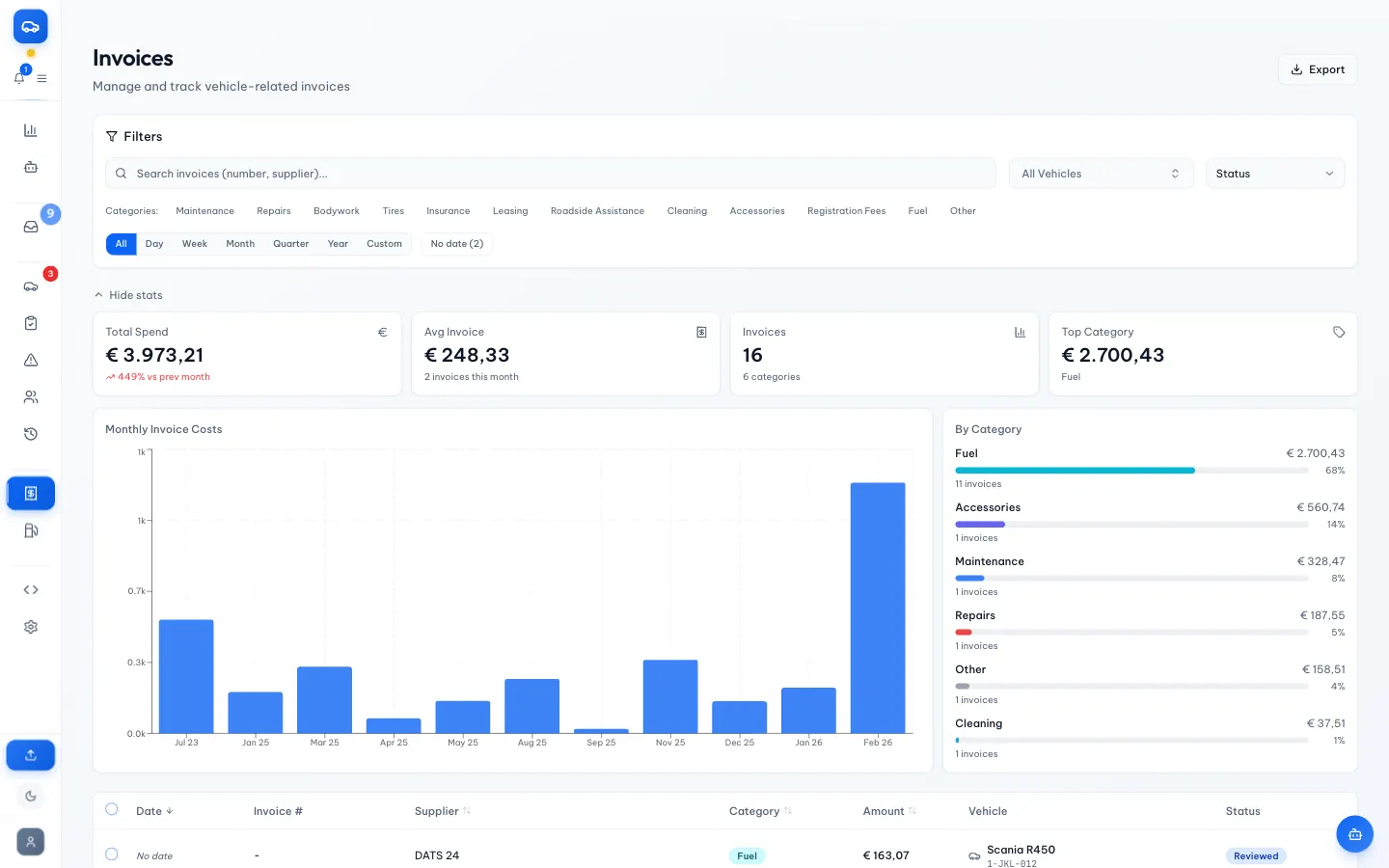
Konvoi Fuel Watch detects fuel theft and fuel-card fraud in truck fleets by comparing each fuel-card transaction with what the vehicle’s own tank sensor saw, and where the vehicle was at the time. Litres that never reached the tank become a case for a person to review.
How a fill is verified
When a truck fills up, its tank-level sender rises. Konvoi learns how many litres one percent of that sender is for each vehicle, adds the fuel the engine burned while the level was rising, and compares the result with the litres on the card transaction.
Each fill gets one verdict. Most say the card matches the tank. The rest say exactly what is off:
- Matches the tank, or within margin: nothing to do.
- Question: more litres were paid than the tank took. These are the unexplained litres.
- No card: the tank rose, but no transaction arrived within seven days.
- No rise: a transaction with no rise in the tank.
- Unpaired: both exist but could not be matched. A data problem, not missing diesel.
What Fuel Watch flags
Each detector opens a fuel case with the evidence attached. Cases are questions for a person, not accusations: a case shows the verdict, one sentence and the numbers behind it. Every detector can be switched off for the workspace or muted for one vehicle.
- Card used away from the vehicle: the station is more than 5 km from the truck at the time of the transaction.
- Card in two places at once: two transactions too far apart to drive between.
- Fill bigger than the tank.
- Wrong fuel for the engine.
- Implausible transaction: an impossible price per litre, quantity or total.
- Buying more than the distance explains, over a 30-day window.
- Paid more than the tank took, for example at your own depot pump.
- A sudden drop in the tank while the vehicle is parked.
Consumption per truck and per driver
The same data gives consumption in litres per 100 km per vehicle and per driver, from fill to fill. Fills are placed where the vehicle actually stood still at the station, not where the terminal clock says, and the same transaction arriving twice (in a daily export and on the invoice) is booked once.
What you need
A telematics connection that reports the tank level: Transics or Ruptela. And your fuel transactions, as exports from AS24, IDS, Romac or ProFleet pumps, or as forwarded invoices from DKV, TotalEnergies, Q8 and others. Workspace admins switch Fuel Watch on themselves in Settings.
Questions
How does Konvoi detect fuel theft?
It compares each fuel-card transaction with the rise in the vehicle’s tank level, measured by the tank sender over CAN, and with the vehicle’s GPS position. Litres the tank did not take, and cards used where the truck was not, open a case for review.
Which fuel cards does Konvoi support?
AS24, IDS and Romac exports and ProFleet depot-pump files are read line by line. Invoices from DKV, TotalEnergies, Q8 and other cards are forwarded to Konvoi and read by AI.
Do I need telematics for fuel theft detection?
Yes. Comparing a transaction with the tank needs the vehicle’s fuel level, which Konvoi reads from Transics or Ruptela. Without it, Konvoi still tracks spend and flags implausible transactions.
How accurate is a tank-level sender?
Senders are imprecise on slopes and while fuel moves, so Konvoi reads levels when the vehicle is still and applies a tolerance: by default the larger of 5 litres and 2% of the tank, adjustable per vehicle.
Does a fuel case mean a driver stole fuel?
No. A case is a question for a person to look at, with the evidence attached. Many cases have an innocent explanation, such as a second tank or a card booked on the wrong plate.
Related
- Telematics Transics, Ruptela and PAJ in one live view.
- Documents & compliance Insurance, inspections, licences and fines read and filed.
- Exceptional transport permits Belgian cat. 1–4, UK STGO and foreign permits in one register.
- Vehicle inspections Walkaround on the phone, sealed report out.
- Driver portal Drivers see their vehicle, papers and fines.
- Konvoi Dispatch Ask your fleet. Approve what it proposes.
Put your fleet
On Autopilot
One platform for your whole transport operation: live telematics, compliance documents, fuel, drivers and inspections.
- Early access to the private beta
- Cancel anytime
- GDPR compliant